EN
EN

Technical Hotline
24/7 expert support ensures quick solutions for your electronics needs
2026/08/03
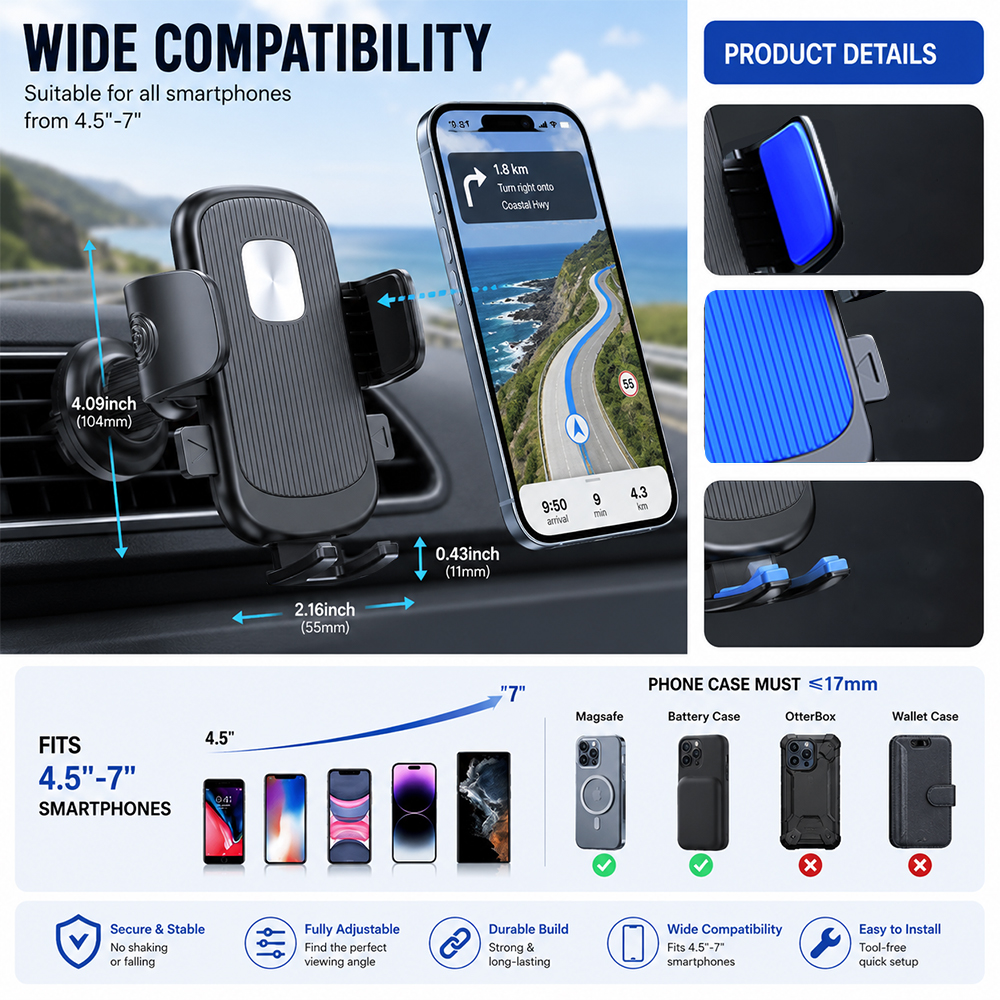
The quality of a car phone mount manufacturer directly impacts your device safety, vehicle aesthetics, and long-term usability. Today's automotive accessory market demands more than basic plastic holders. Manufacturers must meet rigorous international standards, undergo durability testing, and demonstrate material reliability to earn trust from retailers and end users. Understanding these standards helps you identify suppliers who prioritize engineering excellence over cost-cutting shortcuts.
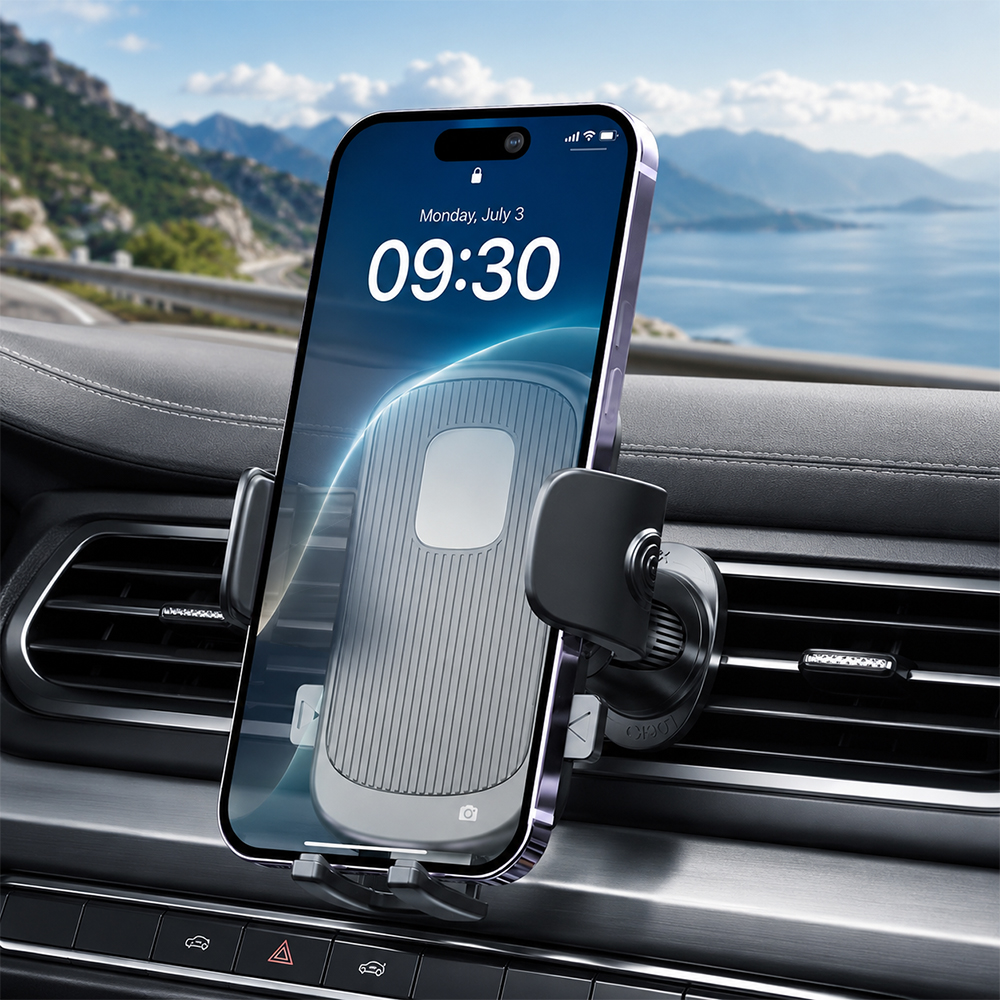
A reliable car phone mount manufacturer operates under strict quality frameworks that ensure structural integrity, material safety, and consistent performance across production batches. These frameworks include ISO certifications, mechanical testing protocols, environmental durability assessments, and traceability systems. When evaluating potential suppliers, from a dashboard phone holder supplier to a specialized windshield mount bracket wholesaler, these manufacturing standards serve as verifiable proof of commitment to quality and customer satisfaction.
Any credible car phone mount manufacturer should maintain ISO 9001 certification, which establishes a quality management system covering design, production, testing, and customer service. ISO 9001 requires documented processes, regular audits, and continuous improvement initiatives. Additionally, many leading manufacturers pursue ISO 14001 environmental management certification, proving they monitor material sourcing, waste reduction, and environmental compliance throughout their operations. These certifications are not one-time achievements. They require annual surveillance audits and renewal every three years, ensuring ongoing accountability.
Beyond general quality management, a reliable dashboard phone holder supplier must perform product-specific testing aligned with automotive standards. This includes vibration resistance testing, thermal cycling to simulate seasonal temperature changes, salt-spray corrosion testing for materials exposed to road salt, and impact drop testing to verify durability under real-world conditions. Many manufacturers also test against IEC standards for electrical safety if their products include charging capabilities or electronic components. These tests must be documented and available for customer review.
A reputable windshield mount bracket wholesaler sources materials meeting strict composition standards. Steel components should conform to ISO 683 specifications for tool steels or structural steels, ensuring consistent hardness and tensile strength. Aluminum parts must meet ISO 209 standards for wrought aluminum alloys. Plastic and polymer components should comply with ISO 1043 material classification and thermal stability standards. These material grades directly influence clamping force retention, vibration resistance, and long-term structural integrity. Manufacturers using verified material suppliers can trace batch certifications and ensure consistency batch to batch.
A magnetic car phone mount distributor must specify finishing processes that protect metal surfaces from corrosion and UV degradation. Electroplating thickness should meet ASTM B117 salt-spray test requirements, typically 200 to 500 hours of corrosion resistance depending on application. Powder coating and anodizing processes must follow ISO 12944 guidelines for corrosion protection levels. Rubber and silicone pads contacting device surfaces should meet FDA or equivalent food-grade material standards to prevent damage to phone screens and coatings. Documentation of these finishes and their durability ratings distinguishes premium manufacturers from those cutting corners on material durability.
Manufacturing standards require a car phone mount manufacturer to implement Statistical Process Control (SPC) systems that monitor production variance. Random sampling from each production batch ensures dimensions remain within tolerance, clamping force consistency stays within specification, and material properties match incoming material certifications. Many manufacturers employ Measurement System Analysis (MSA) to verify that testing equipment itself is accurate and reliable. This data-driven approach prevents defective units from reaching customers and provides objective evidence of manufacturing discipline.
A responsible dashboard phone holder supplier maintains lot-level traceability linking each finished product to its material supplier, production batch, testing date, and inspector. This enables rapid isolation and recall of defective units if issues emerge after distribution. Traceability documentation includes raw material lot numbers, supplier certificates of conformance, production work orders, and quality inspection records. This system supports rapid root-cause investigation, prevents market-wide failures, and demonstrates the manufacturer's accountability to end users and regulatory authorities.
A windshield mount bracket wholesaler sourcing premium inventory looks for manufacturers that publish verified clamping force specifications tested against standardized fixtures. Clamping force should be measured with calibrated instruments and documented for each design variant. Structural load testing verifies that mounting arms, pivot points, and adhesive surfaces withstand the expected stresses from vehicle vibration, acceleration, and emergency braking. Drop tests from specified heights onto concrete surfaces confirm impact resistance. These mechanical specifications, when independently verified, provide objective assurance that the mount will reliably hold devices during normal driving conditions.
A magnetic car phone mount distributor should partner only with manufacturers conducting extended durability simulations. Accelerated lifecycle testing involves thousands of clamping and release cycles, thermal cycling between extreme temperature ranges, and vibration exposure mimicking highway driving. These tests establish realistic service life predictions and identify potential failure modes before commercial launch. Manufacturers publishing these test results demonstrate scientific rigor and commitment to customer safety.
A credible car phone mount manufacturer should maintain current ISO 9001 certification for quality management. Additionally, ISO 14001 environmental management and ISO/IEC 17025 (for testing laboratory accreditation) strengthen credibility. These certifications require annual audits and three-year renewal cycles, ensuring continuous compliance rather than one-time achievement.
Reputable dashboard phone holder suppliers provide test reports from accredited laboratories documenting salt-spray corrosion resistance, vibration testing, thermal cycling, impact drop tests, and clamping force verification. These reports should reference specific standards (ASTM, ISO, IEC) and include dates, test conditions, and results. Third-party laboratory certification adds independent verification beyond internal manufacturer claims.
Material traceability allows a windshield mount bracket wholesaler to verify that each component comes from certified suppliers meeting composition standards. This enables rapid root-cause investigation if issues emerge, supports quality recalls, and ensures consistency batch to batch. Manufacturers without traceability systems cannot provide this accountability, increasing risk of unexpected failures affecting end users.
2026/08/17
How do top car phone holder wholesale suppliers thrive amid shifting demand, tech shifts & supply chain volatility? Agile responses boost margins.
2026/08/17
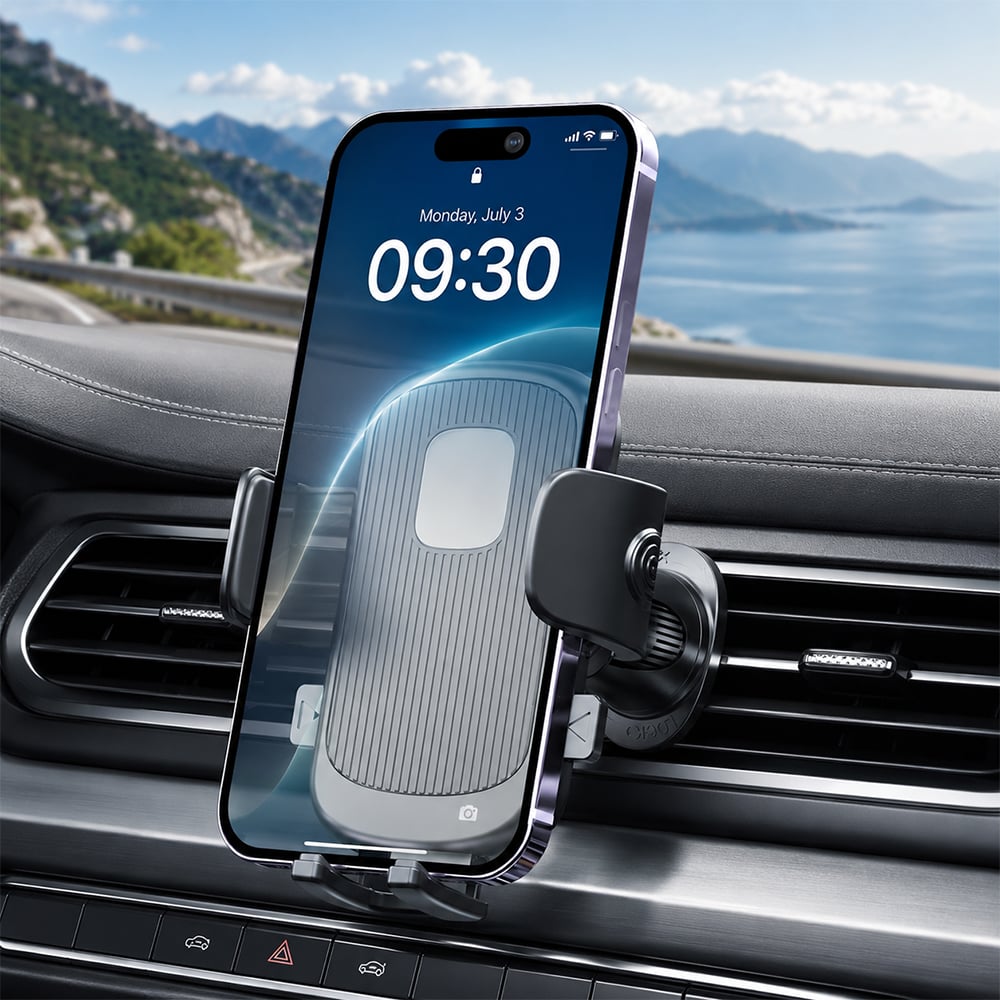
Struggling to expand automotive accessories without bloating inventory? Car phone holder wholesale boosts margins, meets demand & simplifies supply chains.
2026/08/03
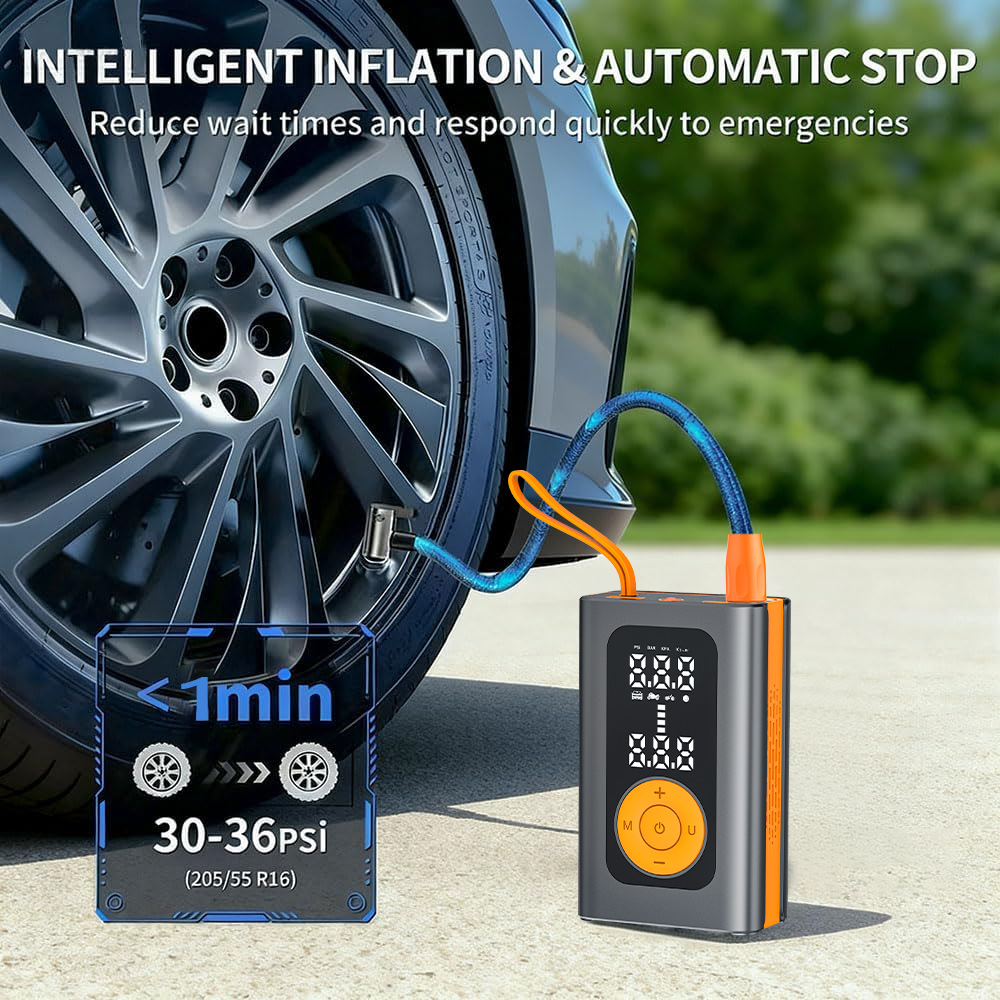
Bulk sourcing cordless tire inflators? Discover 7 key features—brushless motors to USB-C charging—that boost ROI, durability & uptime.
2026/08/04
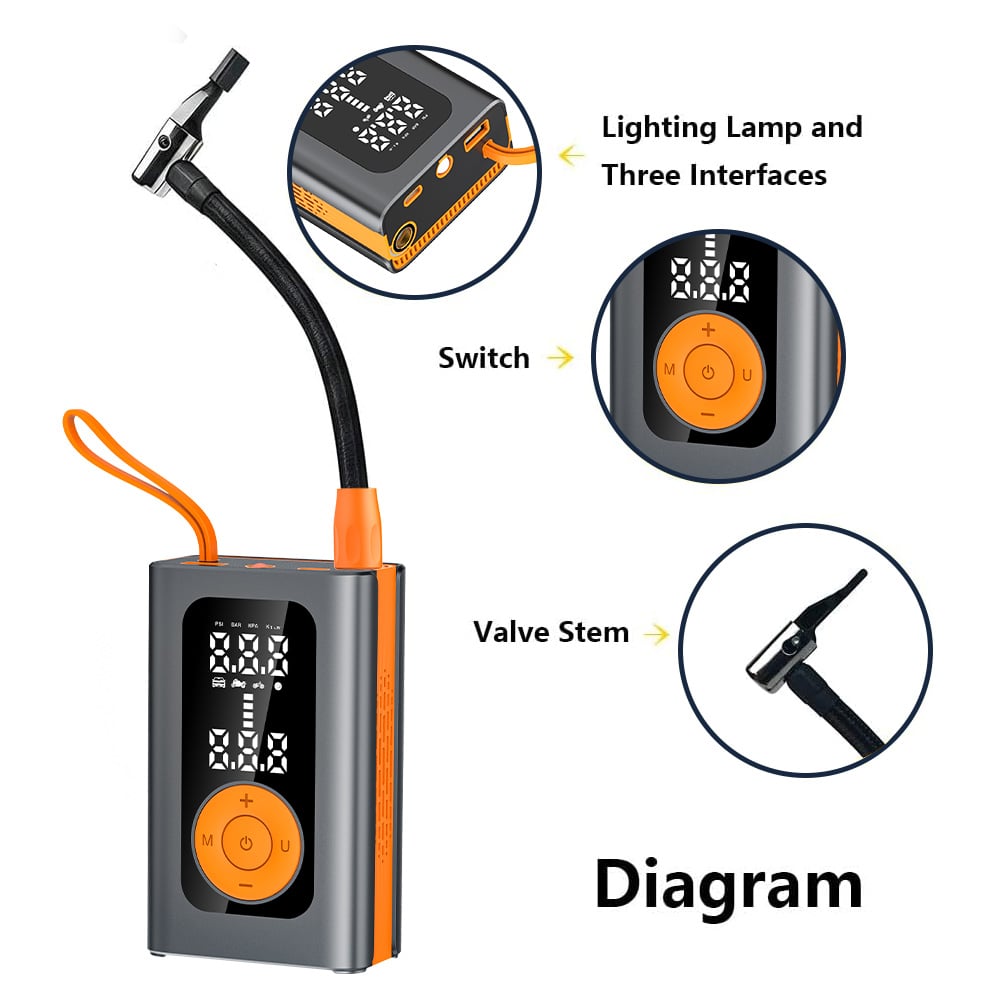
Struggling with product failures and warranty claims? Discover how top tire inflator suppliers boost reliability, cut costs, and win trust.
2026/08/05
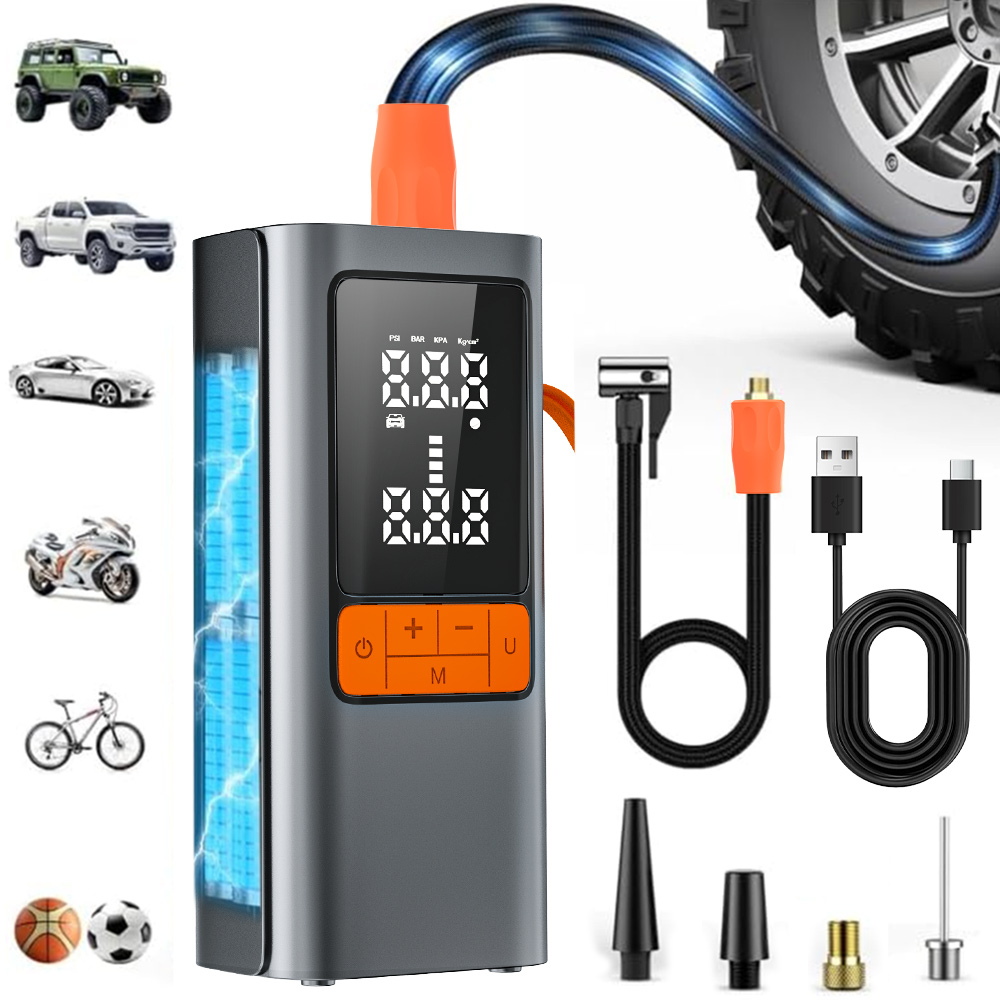
5 key drivers—quality demand, tech advances, safety needs, supply resilience & differentiation—push brands to reassess tire inflator suppliers now.
2026/08/06
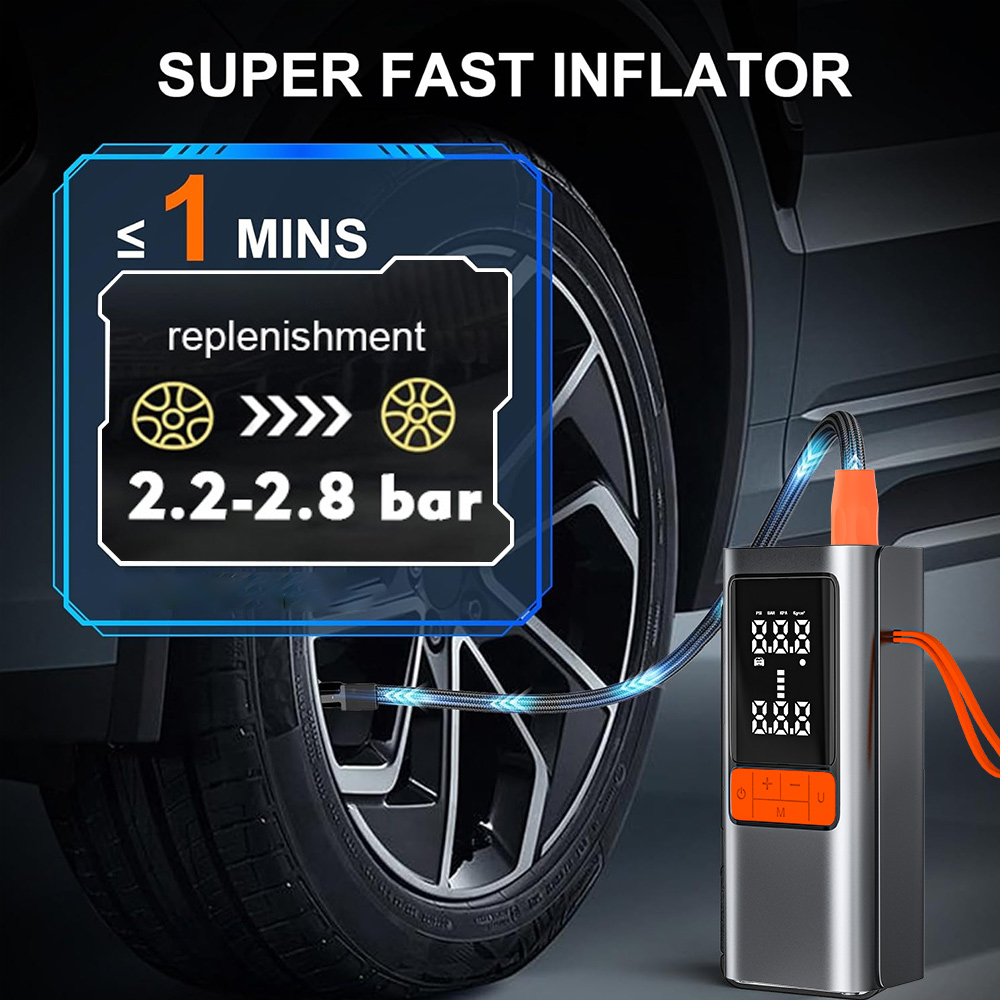
What truly separates top tire inflator suppliers? Discover 7 capabilities—smart tech, aluminum build, 5-yr warranty—that define reliable suppliers.

24/7 expert support ensures quick solutions for your electronics needs

12-month warranty coverage for all purchased electronic accessories

Reliable spare parts supply to guarantee uninterrupted device operation

CE, FCC, RoHS, UKCA certified for global market compliance and safety